The Rise of Work-From-Home and Its Impact on India’s Real Estate Market
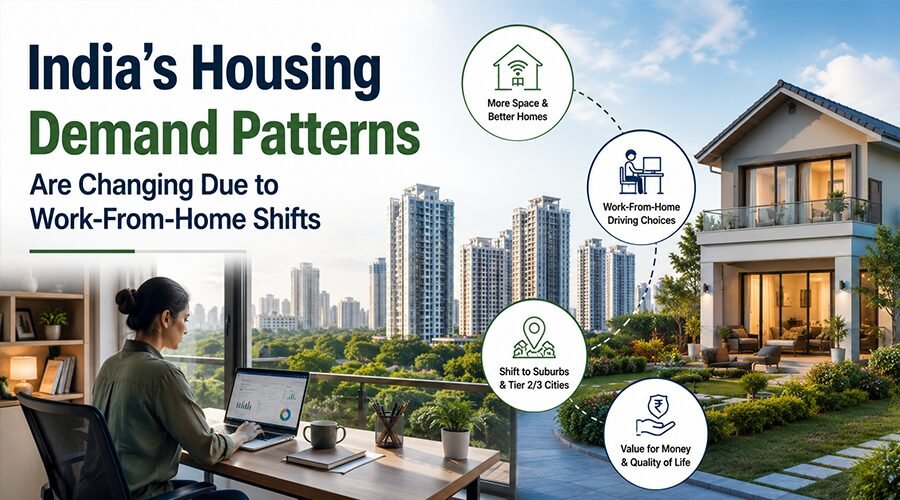
India’s residential real estate market is undergoing a major transformation as work-from-home (WFH) culture reshapes housing preferences across metropolitan cities, Tier-2 towns, and emerging suburban regions. The pandemic accelerated remote and hybrid work models, but even after offices reopened, millions of professionals continue to prefer flexible work arrangements. This long-term behavioral shift has fundamentally changed how Indian homebuyers evaluate residential properties.
Today’s buyers no longer focus solely on proximity to office hubs. Instead, they prioritize larger living spaces, dedicated home offices, premium lifestyle amenities, better connectivity, affordability, and healthier environments. As a result, developers, investors, and urban planners are adapting rapidly to changing housing demand patterns.
The Indian housing sector is now witnessing strong demand in suburban corridors, integrated townships, plotted developments, and smart residential communities designed specifically for the new work-life balance.
Why Work-From-Home Has Changed Housing Preferences in India
Homebuyers Now Prioritize Space Over Location
Before remote work became mainstream, residential demand in cities like Gurugram, Mumbai, Bengaluru, and Noida was centered around office districts and IT corridors. Buyers preferred compact apartments close to workplaces to reduce commuting time.
Now, professionals working remotely are choosing homes based on comfort and functionality. This has triggered rising demand for:
- 3 BHK and 4 BHK apartments
- Independent floors
- Villas and plotted developments
- Homes with study rooms and office spaces
- Properties with balconies, terraces, and green surroundings
Families are investing in homes that support both professional and personal lifestyles under one roof.
Suburban and Tier-2 Cities Are Experiencing Rapid Growth
Affordable Housing Markets Are Gaining Momentum
One of the biggest shifts in Indian real estate is the migration of demand from expensive urban cores toward suburban and Tier-2 cities. Areas with better affordability and infrastructure are becoming preferred residential destinations.
Cities such as:
- Sonipat
- Greater Noida
- Lucknow
- Indore
- Jaipur
- Chandigarh
are attracting professionals seeking affordable yet spacious homes with modern amenities.
This trend is especially visible among IT employees, startup founders, freelancers, digital entrepreneurs, and multinational company professionals who can work remotely without daily office visits.
Lower property prices, reduced congestion, cleaner environments, and improved infrastructure are driving the popularity of these emerging residential hubs.
Demand for Larger Homes Has Increased Significantly
Dedicated Workspaces Have Become Essential
Modern homebuyers now consider a dedicated workspace a necessity rather than a luxury. The concept of “live-work homes” has become mainstream across India’s residential sector.
Developers are increasingly designing homes with:
- Separate office rooms
- Flexible workspaces
- Soundproof study areas
- High-speed internet infrastructure
- Co-working lounges within residential projects
The demand for larger configurations has increased sharply because families need homes capable of accommodating work meetings, online education, recreation, and wellness activities simultaneously.
This has resulted in higher sales of premium apartments, duplexes, and gated villas across major housing markets.
Integrated Townships Are Becoming Highly Preferred
Self-Sustained Communities Are the Future of Urban Living
Integrated townships are witnessing exceptional demand because they provide everything residents need within a single ecosystem. Remote workers increasingly prefer communities that minimize dependence on external infrastructure.
Modern township developments now include:
- Retail spaces
- Schools and healthcare centers
- Clubhouses and sports facilities
- Co-working spaces
- Green parks and walking tracks
- Cafes and entertainment zones
These self-sufficient environments support productivity, wellness, and convenience, making them ideal for hybrid work lifestyles.
The popularity of integrated developments is particularly strong in peripheral areas of Delhi NCR, Pune, and Hyderabad.
Plotted Developments Are Seeing Massive Demand
Buyers Want Flexibility and Long-Term Appreciation
The work-from-home trend has revived interest in plotted developments and low-density housing. Buyers increasingly prefer land ownership because it offers flexibility to build customized homes suited to evolving lifestyle requirements.
Plotted developments are becoming popular due to:
- Lower maintenance costs
- Better privacy
- Expansion flexibility
- Higher appreciation potential
- Greater open spaces
Regions surrounding major urban centers are witnessing a surge in plotted township projects as investors seek long-term capital appreciation opportunities.
This trend is especially visible in regions around Sonipat, Yamuna Expressway, and New Chandigarh.
Technology Infrastructure Has Become a Key Buying Factor
Digital Connectivity Drives Modern Housing Demand
Reliable internet connectivity is now one of the most important criteria for residential property selection. Professionals working remotely require seamless digital infrastructure for meetings, cloud access, collaboration, and business operations.
Residential projects offering:
- Fiber-optic internet
- Smart home automation
- Power backup
- Tech-enabled security systems
- Digital access control
are gaining a competitive advantage in the market.
Smart homes are no longer premium niche products; they are rapidly becoming mainstream requirements among urban homebuyers.
Health, Wellness, and Open Spaces Influence Buyer Decisions
Lifestyle-Oriented Housing Is Dominating the Market
The shift toward remote work has increased the amount of time people spend at home, making wellness-focused living environments more important than ever.
Today’s homebuyers actively seek properties with:
- Landscaped gardens
- Walking and cycling tracks
- Meditation zones
- Fitness centers
- Natural ventilation
- Low-density planning
Developers emphasizing sustainability and wellness are witnessing stronger buyer engagement.
This trend has accelerated demand for eco-friendly residential projects that combine productivity with quality living standards.
Rental Housing Patterns Are Also Changing
Professionals Are Moving Away from Expensive City Centers
The WFH revolution has impacted India’s rental housing market significantly. Many professionals no longer need to live close to office districts, resulting in changing rental demand patterns.
Key rental trends include:
- Increased demand for larger rental homes
- Preference for furnished apartments
- Rising rentals in suburban markets
- Declining dependence on shared accommodations
- Growing demand in Tier-2 cities
Landlords are also redesigning rental properties to include workstations and flexible office-friendly layouts.
Real Estate Developers Are Redesigning Residential Projects
Builders Are Adapting to New Consumer Expectations
Indian developers are rapidly evolving project designs to align with post-pandemic lifestyle needs. Residential launches now focus heavily on hybrid work compatibility.
Key design innovations include:
- Multi-functional rooms
- Home office-ready layouts
- Soundproof interiors
- Enhanced ventilation
- Larger balconies
- Community work lounges
Developers are also launching projects in emerging micro-markets where land availability allows larger community planning at affordable prices.
This strategic shift is helping the real estate industry maintain strong housing demand despite changing economic conditions.
Investment Opportunities Are Expanding Beyond Metro Cities
Emerging Real Estate Corridors Offer High Growth Potential
The decentralization of work culture has unlocked major investment opportunities across India’s emerging residential corridors.
Investors are increasingly targeting:
- Peripheral urban regions
- Smart city projects
- Township developments
- Affordable luxury housing
- Plotted communities
Infrastructure projects such as expressways, metro expansions, industrial corridors, and airport developments are further boosting residential growth in suburban markets.
Locations with strong connectivity and infrastructure pipelines are witnessing substantial appreciation potential due to sustained housing demand.
The Future of India’s Housing Market in the Work-From-Home Era
India’s housing market is entering a new era shaped by flexibility, technology, wellness, and lifestyle-driven living. The traditional concept of buying homes solely near office hubs is rapidly evolving.
Future housing demand will continue to favor:
- Spacious homes
- Integrated communities
- Smart residential infrastructure
- Affordable suburban locations
- Wellness-oriented developments
- Flexible living environments
As remote and hybrid work models become permanent for many industries, residential real estate developers, investors, and policymakers must continue adapting to evolving consumer behavior.
The work-from-home revolution has not reduced housing demand in India — it has redefined it completely. Buyers are now searching for homes that deliver comfort, productivity, connectivity, and long-term lifestyle value simultaneously.
India’s real estate sector is therefore witnessing not just a temporary shift, but a structural transformation that will shape housing demand patterns for the next decade.
Conclusion
The transformation of India’s housing demand patterns due to work-from-home culture is creating unprecedented opportunities across the residential real estate sector. From suburban townships to smart homes and plotted developments, buyers are prioritizing quality living, space, wellness, and flexibility like never before.
As infrastructure development accelerates and remote work becomes deeply integrated into modern lifestyles, India’s emerging residential corridors are expected to drive the next phase of real estate growth. Developers and investors who understand these evolving consumer preferences will be best positioned to capitalize on the future of Indian housing demand.